Orthopaedic, Spine and Movement Care

Tennis Elbow

Lateral elbow tendinopathy, pain relief and arm function

Tennis Elbow treatment at Nimba
Category
Orthopaedic, Spine and Movement Care
Research
4 published studies
Approach
Doctor led, no cure claims
What is it?

Understanding tennis elbow

Tennis elbow, medically known as lateral elbow tendinopathy, is a painful condition affecting the tendons that attach the wrist extensor muscles to the outer side of the elbow. Despite its name, it commonly affects people who do not play tennis.

The condition develops when repeated or excessive loading exceeds the tendon's ability to tolerate and recover from physical stress. Long standing cases may involve changes in tendon structure and collagen organisation rather than simply acute inflammation.

Lifestyle and occupational factors such as repetitive gripping, forceful wrist movements, frequent tool use, heavy lifting and insufficient recovery may contribute to symptoms. Smoking has also been associated with lateral epicondylitis in population research. The condition is common among manual workers, office workers, homemakers and recreational athletes.

Typical signs and symptoms include pain over the outer elbow, tenderness, reduced grip comfort and pain when lifting objects, turning a door handle, carrying a bag or extending the wrist against resistance. Persistent discomfort may interfere with work, household activities and sleep.


Nimba evidence based treatment

How Nimba treats tennis elbow

At Nimba, tennis elbow rehabilitation focuses on improving tendon load tolerance, reducing pain, restoring grip function and helping patients return safely to everyday activities.

The programme combines assessment led physiotherapy, progressive strengthening, activity modification and selected supportive natural treatments.

01
01

Personalised Elbow and Functional Assessment

The programme begins with an evaluation of pain location, grip strength, wrist movement, repetitive activities, occupational demands and previous treatment.

Mechanism of Action: Identifying movements and loading patterns associated with symptoms allows rehabilitation to be matched to the patient's functional limitations. Examination also helps distinguish tendon pain from nerve compression or pain referred from the neck.

02
02

Progressive Tendon Strengthening

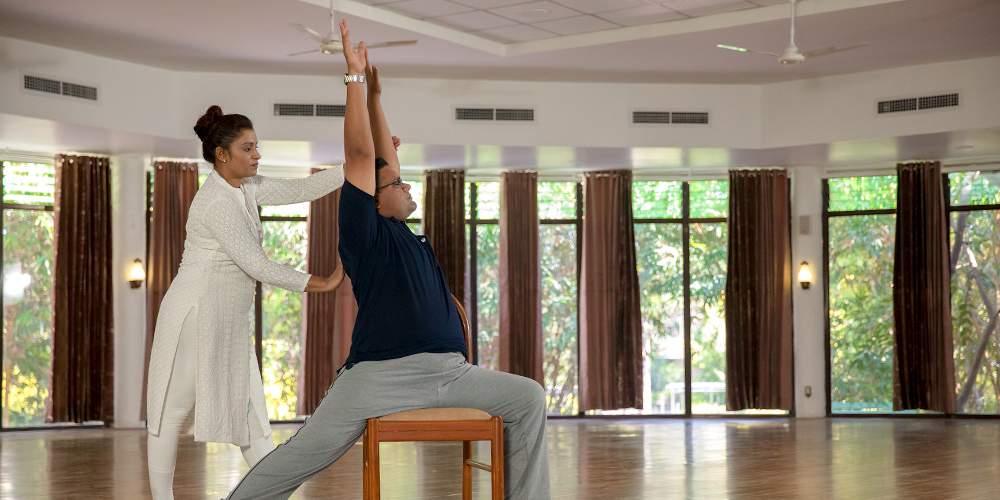
A supervised exercise programme may include gentle isometric wrist extensor exercises followed by progressive concentric and eccentric strengthening with suitable resistance.

Mechanism of Action: Controlled loading helps the wrist extensor muscles and tendon adapt to increasing physical demands. Randomised studies show that progressive exercise can reduce pain in chronic tennis elbow. The programme is advanced according to symptoms and function rather than a fixed schedule for everyone.

03
03

Therapeutic Physiotherapy and Manual Mobilisation

Where clinically appropriate, physiotherapists may combine strengthening with selected elbow mobilisation techniques.

Mechanism of Action: Manual mobilisation may provide short term pain relief, making movement and strengthening easier to perform. A randomised trial found that mobilisation combined with exercise improved short term outcomes compared with a wait and see approach, although long term recovery rates were similar.

04
04

Activity Modification and Ergonomic Training

Patients receive practical guidance on reducing unnecessarily forceful gripping, adjusting tool handles, changing repetitive work patterns and using temporary activity modifications.

Mechanism of Action: Managing the amount and intensity of tendon loading can reduce repeated symptom aggravation while allowing gradual recovery of physical capacity. Complete and prolonged avoidance of arm movement is generally unnecessary.

05
Supportive Hydrotherapy and Comfort Measures at Nimba

Supportive Hydrotherapy and Comfort Measures

Cold or gentle warmth may be used selectively according to individual comfort and symptom response.

Mechanism of Action: Temperature based applications may temporarily alter pain perception and provide comfort. They are supportive measures and have not been established as treatments that repair tendon structure or accelerate long term recovery.

06
Yoga and Relaxation Support at Nimba

Yoga and Relaxation Support

Gentle upper limb mobility, breathing exercises and relaxation may be incorporated where pain related tension or reduced confidence affects daily functioning.

Mechanism of Action: These practices may support relaxation and general movement confidence. They do not replace progressive tendon strengthening and have not been established as specific treatments for lateral elbow tendinopathy.

07
07

Clinical Monitoring and Safety

Progress is evaluated through pain during gripping and lifting, pain free grip strength, functional activity and validated measures such as the Patient Rated Tennis Elbow Evaluation (PRTEE).

Persistent numbness, increasing weakness, significant swelling, a history of trauma or failure to improve warrants further medical assessment. Treatment should not be continued through progressively worsening pain.

Research references

The research behind this plan

Studies selected by Nimba's medical team. They describe research findings, not promises for any one person.

  1. Haahr JP, Andersen JH. (2003).

    “Physical and psychosocial risk factors for lateral epicondylitis: A population based case referent study.”

    Occupational and Environmental Medicine, 60(5), 322 to 329.

    PubMed, PMID: 12709516

    Research Finding: This study compared 267 new cases of tennis elbow with 388 population controls. Forceful work, repetitive arm movement and non neutral hand or arm positions were associated with the condition. The results support assessment of work related physical loading.

  2. Shiri R, Viikari Juntura E, Varonen H, Heliövaara M. (2006).

    “Prevalence and determinants of lateral and medial epicondylitis: A population study.”

    American Journal of Epidemiology, 164(11), 1065 to 1074.

    PubMed, PMID: 16968862

    Research Finding: In a population study involving 4,783 adults, smoking and the combination of repetitive and forceful arm activities were associated with lateral epicondylitis. These observational findings identify potentially modifiable risk factors but do not prove direct causation.

  3. Peterson M, Butler S, Eriksson M, Svärdsudd K. (2011).

    “A randomized controlled trial of exercise versus wait list in chronic tennis elbow (lateral epicondylosis).”

    Upsala Journal of Medical Sciences, 116(4), 269 to 279.

    PubMed, PMID: 22066975

    Research Finding: In a randomised trial of 81 patients with chronic tennis elbow, three months of progressively increased exercise produced faster and greater reductions in pain than waiting without the exercise programme. Between group differences in disability scores and quality of life were not significant.

  4. Bisset L, Beller E, Jull G, Brooks P, Darnell R, Vicenzino B. (2006).

    “Mobilisation with movement and exercise, corticosteroid injection, or wait and see for tennis elbow: Randomised trial.”

    BMJ, 333(7575), 939.

    PubMed, PMID: 17012266

    Research Finding: In a randomised trial involving 198 patients, physiotherapy combining mobilisation and exercise produced better short term outcomes than waiting. At 52 weeks, outcomes were similar between physiotherapy and wait and see groups, while corticosteroid injections were associated with higher recurrence rates. The findings support physiotherapy as a reasonable management option without overstating long term superiority.

New · Online Lifestyle Consultation

Not ready to travel yet? Start with a doctor online.

Speak to a Nimba doctor by video from home about your health, your reports and whether a stay suits you.

FAQs

Tennis Elbow: your questions

Can Nimba cure tennis elbow?

No cure is promised. Nimba's doctors plan research based treatments that support your recovery alongside the care you already receive. Any change to your medicines is made only with medical advice.

Do I need to stop my medicines?

No. Bring your regular medicines and recent reports. Your Nimba doctor will review them and coordinate with your own doctor where needed. Never stop a medicine on your own.

How long should I stay?

The minimum stay is five nights. Your doctor suggests the length of stay and the programme after consultation.

Is a stay suitable for me?

A Nimba doctor decides after reviewing your history and reports. Some acute or severe conditions need hospital care first. You can start with the free Health Test, a call with a doctor or an online lifestyle consultation.

Which reports should I bring?

Health reports not older than three months, a list of your medicines, and any recent scans or prescriptions relating to your condition.

Nature cures the best

The choice is clear: Heal(th) first.

Reserve your slot for ₹5,000, adjusted against your stay, or test your healing age and talk it through with a Nimba doctor.

Choose your language

EnglishEnglishગુજરાતીGujaratiहिन्दीHindiमराठीMarathiతెలుగుTeluguಕನ್ನಡKannadaFrançaisFrenchDeutschGerman
WhatsApp us