Orthopaedic, Spine and Movement Care

Spinal Degeneration

Cervical and lumbar spondylosis, support for spinal mobility and function

Spinal Degeneration treatment at Nimba
Category
Orthopaedic, Spine and Movement Care
Research
4 published studies
Approach
Doctor led, no cure claims
What is it?

Understanding spinal degeneration

Spinal degeneration, commonly called spondylosis, refers to age related changes in the intervertebral discs, vertebral joints and surrounding structures of the neck (cervical spine) or lower back (lumbar spine). These changes may contribute to pain and stiffness, although they frequently occur without symptoms.

Ageing, genetic susceptibility and cumulative mechanical loading influence spinal degeneration. Research also associates excess body weight with greater lumbar disc degeneration. However, degenerative findings on an X ray or MRI do not necessarily explain a person's pain or indicate that surgery is required.

Lifestyle related factors such as prolonged inactivity, repetitive or poorly tolerated physical loading, reduced muscular endurance and inadequate recovery can aggravate neck or lower back symptoms. Reduced physical activity may also contribute to muscle deconditioning and greater difficulty performing daily tasks.

Common signs and symptoms include neck or lower back pain, stiffness, restricted movement and muscular discomfort. When nerves are affected, patients may experience pain radiating into an arm or leg, tingling, numbness or weakness. Significant nerve or spinal cord compression requires medical assessment.


Nimba evidence based treatment

How Nimba treats spinal degeneration

At Nimba, spinal rehabilitation focuses on improving movement, rebuilding muscular support, reducing pain related disability and helping patients return confidently to everyday activities.

The programme combines assessment led physiotherapy, therapeutic yoga, exercise rehabilitation and practical lifestyle guidance. Its objective is functional recovery and symptom management, not the reversal of age related disc degeneration.

01
01

Personalised Spine and Functional Assessment

The programme begins with an evaluation of pain distribution, movement limitations, muscle strength, neurological symptoms, work habits, daily activities and previous investigations.

Mechanism of Action: Distinguishing mechanical pain, movement related disability and possible nerve involvement allows exercises to be selected safely. Imaging is reviewed when clinically indicated, without treating every degenerative scan finding as the cause of symptoms.

02
02

Therapeutic Physiotherapy and Muscle Strengthening

A progressive exercise programme may include neck muscle endurance training, cervical stabilisation, trunk and hip strengthening, graded mobility and functional movement exercises.

Mechanism of Action: Progressive muscle training improves muscular capacity, movement control and tolerance for daily activities. Clinical trials show that targeted neck strengthening and endurance exercise can reduce pain and disability in patients with chronic nonspecific neck pain.

03
Therapeutic Yoga and Spinal Mobility at Nimba

Therapeutic Yoga and Spinal Mobility

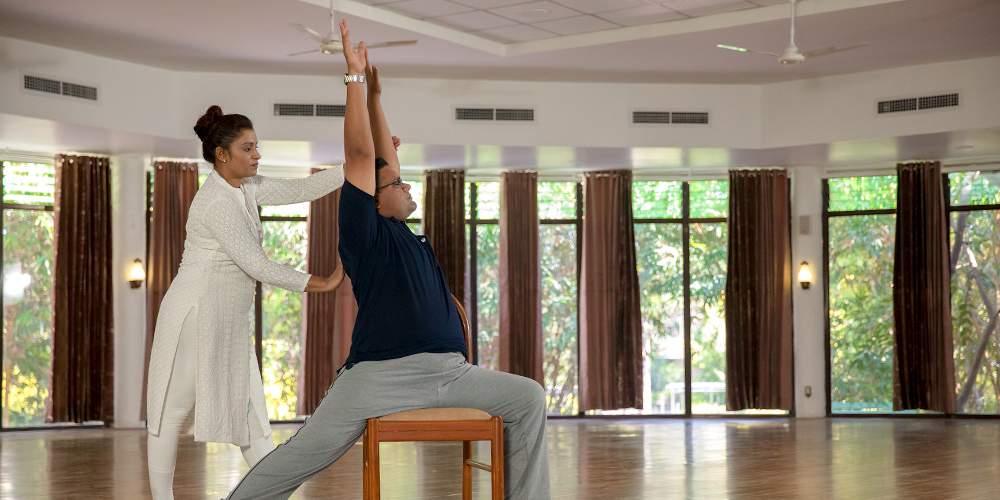
Individualised yoga sessions may include gentle mobility exercises, comfortable postures, controlled movement and relaxation. Activities are modified according to pain, balance and neurological findings.

Mechanism of Action: Appropriately adapted yoga may improve flexibility, movement confidence and functional ability while helping patients manage persistent discomfort. Randomised evidence supports yoga as one option for chronic nonspecific lower back pain, but does not establish that it reverses spondylosis.

04
04

Posture, Ergonomics and Activity Modification

Patients receive guidance on varying prolonged sitting positions, adjusting workstations, lifting safely and gradually returning to activities that have become difficult.

Mechanism of Action: Reducing prolonged static loading and distributing physical activity throughout the day may improve comfort and reduce repeated symptom aggravation. There is no single ideal posture for everyone; regular movement and appropriate activity tolerance are emphasised.

05
Supportive Hydrotherapy and Relaxation at Nimba

Supportive Hydrotherapy and Relaxation

Where appropriate, gentle warm water exercise or other supervised comfort measures may complement the rehabilitation programme.

Mechanism of Action: Water buoyancy can make selected movements easier by reducing weight bearing demands. Warmth may provide temporary muscular comfort. These measures are supportive and are not proven to repair degenerated discs or relieve significant nerve compression.

06
Weight Management and Physical Activity at Nimba

Weight Management and Physical Activity

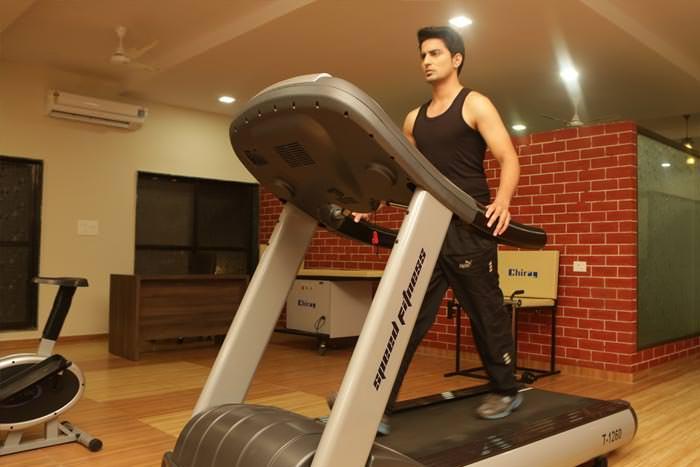
Patients with excess body weight or low activity levels may receive individualised dietary counselling and a gradual walking or conditioning programme.

Mechanism of Action: Weight management supports overall metabolic and musculoskeletal health, while progressive activity improves endurance and physical capacity. Although higher body weight is associated with lumbar disc degeneration, evidence does not establish that weight loss regenerates damaged discs.

07
07

Clinical Monitoring and Safety

Progress is measured through pain intensity, neck and lower back mobility, strength, walking or activity tolerance, and validated disability measures such as the Neck Disability Index or Oswestry Disability Index.

Progressive arm or leg weakness, walking imbalance, loss of hand coordination, new bladder or bowel dysfunction or numbness around the groin requires prompt medical assessment. New bladder or bowel dysfunction with suspected spinal nerve compression is an emergency.

Research references

The research behind this plan

Studies selected by Nimba's medical team. They describe research findings, not promises for any one person.

  1. Nakashima H, Yukawa Y, Suda K, et al. (2015).

    “Abnormal findings on magnetic resonance images of the cervical spines in 1211 asymptomatic subjects.”

    Spine, 40(6), 392 to 398.

    PubMed, PMID: 25584950

    Research Finding: This MRI study of 1,211 people without symptoms found that cervical disc bulging was common and increased with age. It demonstrates why degenerative imaging findings must be interpreted alongside symptoms and clinical examination.

  2. Samartzis D, Karppinen J, Chan D, Luk KDK, Cheung KMC. (2012).

    “The association of lumbar intervertebral disc degeneration on magnetic resonance imaging with body mass index in overweight and obese adults: A population based study.”

    Arthritis & Rheumatism, 64(5), 1488 to 1496.

    PubMed, PMID: 22287295

    Research Finding: In a population based study involving 2,599 adults, higher body mass index was associated with a greater presence and severity of lumbar disc degeneration. The study supports attention to body weight related risk but cannot establish that obesity directly caused the imaging changes.

  3. Ylinen J, Takala EP, Nykänen M, et al. (2003).

    “Active neck muscle training in the treatment of chronic neck pain in women: A randomized controlled trial.”

    JAMA, 289(19), 2509 to 2516.

    PubMed, PMID: 12759322

    Research Finding: In a randomised trial involving 180 women with chronic nonspecific neck pain, structured strength and endurance training reduced pain and disability more than the control programme. The results support active exercise rehabilitation, although the study was not limited to patients with confirmed cervical spondylosis.

  4. Saper RB, Lemaster C, Delitto A, et al. (2017).

    “Yoga, Physical Therapy, or Education for Chronic Low Back Pain: A Randomized Noninferiority Trial.”

    Annals of Internal Medicine, 167(2), 85 to 94.

    PubMed, PMID: 28631003

    Research Finding: In a randomised trial involving 320 adults with chronic nonspecific lower back pain, a structured yoga programme was not inferior to physiotherapy for pain and function after 12 weeks. Yoga was not superior to education on the primary outcomes. The findings support yoga as a possible rehabilitation option, not as a treatment that reverses spinal degeneration.

New · Online Lifestyle Consultation

Not ready to travel yet? Start with a doctor online.

Speak to a Nimba doctor by video from home about your health, your reports and whether a stay suits you.

More in this category

Orthopaedic, Spine and Movement Care

FAQs

Spinal Degeneration: your questions

Can Nimba cure spinal degeneration?

No cure is promised. Nimba's doctors plan research based treatments that support your recovery alongside the care you already receive. Any change to your medicines is made only with medical advice.

Do I need to stop my medicines?

No. Bring your regular medicines and recent reports. Your Nimba doctor will review them and coordinate with your own doctor where needed. Never stop a medicine on your own.

How long should I stay?

The minimum stay is five nights. Your doctor suggests the length of stay and the programme after consultation.

Is a stay suitable for me?

A Nimba doctor decides after reviewing your history and reports. Some acute or severe conditions need hospital care first. You can start with the free Health Test, a call with a doctor or an online lifestyle consultation.

Which reports should I bring?

Health reports not older than three months, a list of your medicines, and any recent scans or prescriptions relating to your condition.

Nature cures the best

The choice is clear: Heal(th) first.

Reserve your slot for ₹5,000, adjusted against your stay, or test your healing age and talk it through with a Nimba doctor.

Choose your language

EnglishEnglishગુજરાતીGujaratiहिन्दीHindiमराठीMarathiతెలుగుTeluguಕನ್ನಡKannadaFrançaisFrenchDeutschGerman
WhatsApp us